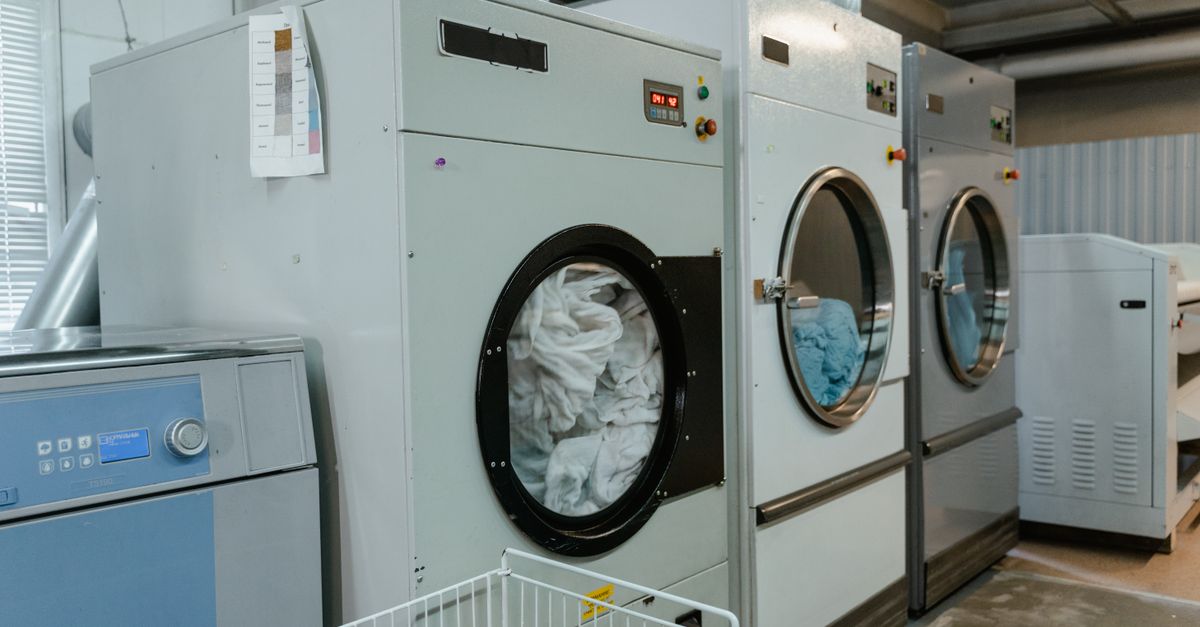
A dryer that suddenly takes much longer to dry clothes is usually dealing with restricted airflow, an overloaded or mismatched load, the wrong cycle setting, or a dirty moisture sensor. Start with the lint screen, the hose behind the dryer, and the outside vent before you assume a bad part. If the dryer heats but clothes still come out damp, airflow or venting is the first thing to suspect.
Quick answer: what usually makes a dryer dry slowly
The most common reason a dryer starts drying slowly is poor airflow. A dryer can still feel warm and leave clothes damp if the air cannot move through the drum and out the vent.
Other common causes are a load that is too full, mixed fabrics that dry at different speeds, a low-heat or sensor cycle that is behaving differently than you expect, or a moisture sensor that is dirty or misreading the load. If the dryer used to work fine and the problem showed up suddenly, airflow or venting is usually the first place to look.
Before you start
- Unplug an electric dryer before you reach behind it or remove any covers.
- If you have a gas dryer, do not open gas lines or sealed burner parts.
- Let the dryer cool if it has been running hot.
- Keep the dryer turned on only long enough to check the outside vent flap and airflow.
- Stop and call for service if you smell gas, see scorch marks, hear grinding, or notice repeated breaker trips.
This article covers the checks you can do safely from the outside, plus the simple cleaning and load changes that solve most slow-drying problems. If those do not help, the issue may be inside the dryer or in the vent line beyond easy reach.
Is it airflow, heat, load, or sensing?
A quick way to narrow it down is to match the symptom to the cause.
| What you notice | Most likely place to check first |
|---|---|
| Clothes are warm but still damp | Airflow, lint path, vent |
| Dryer room or cabinet feels very hot | Vent restriction |
| Small loads still dry slowly | Heat, airflow, or dryer fault |
| Cycle ends too early | Moisture sensor or cycle settings |
| Towels stay damp while lighter items finish | Load mix or bunching |
If clothes are warm but still damp, think airflow first. If the dryer cabinet or laundry room feels very hot, that also points toward restricted venting.
If small loads also take too long, or if a clean, simple load still finishes damp, look at heat, venting, or the dryer itself. If the dryer stops too early, or the cycle seems to end before the clothes are actually dry, the moisture sensor or the selected cycle may be involved. A useful rule: warm clothes with long dry times usually mean airflow trouble, while oddly short cycles usually point to sensing or settings.
This is not a full diagnosis, but it helps you avoid opening the dryer before the simple causes are ruled out.
Quick checks to do first
- Pull out and clean the lint screen.
- Check the lint trap opening for built-up lint you can reach by hand or with a vacuum hose.
- Look behind the dryer for a crushed, kinked, or detached duct hose.
- Make sure the outside vent flap opens when the dryer runs.
- Run a normal timed dry cycle on a medium load and see whether the drum gets warm air.
If the lint screen was packed, the hose was bent, or the outside flap barely moves, you likely found the problem. If all of that looks normal and the dryer still dries slowly, the restriction may be deeper in the vent line or the issue may be elsewhere.
A clean lint screen helps, but it does not prove the vent is clear farther downstream. Owners often stop at the screen and miss a blocked hose or a clogged exterior hood.
Check the airflow before you think about parts
Start with airflow because it is the safest and most common fix.
A dryer can heat normally and still dry slowly if lint or a crushed duct is choking the airflow. The clothes may feel warm, but the moisture stays in the drum because the wet air cannot leave fast enough.
Go outside while the dryer runs. You should usually see the vent flap move and feel a steady flow of warm air. If the airflow is weak, the flap barely opens, or lint collects around the hood, the vent path may be restricted.
A blocked vent outside often shows up as weak exhaust, lint around the outside flap, heat buildup in the laundry area, and drying times that keep getting worse over days or weeks. A clean lint screen does not rule this out. If the dryer is getting hotter than usual but the clothes still stay damp, that is another strong sign of vent trouble.
If you notice those symptoms, cleaning only the screen or only the short hose usually will not fix the underlying issue. The blockage may be farther along the line, and that is where a vent cleaning service or a model-specific inspection may be needed.
Check heat and cycle settings
A dryer that heats weakly, or a dryer set to a gentle cycle, can seem broken when it is really just operating differently. Compare what you hear and feel with the settings you chose before you open anything.
If you accidentally selected an air-fluff, no-heat, or very low-heat cycle, drying will take much longer even though the dryer is working normally. When the setting is correct and the dryer still barely warms, stop there and move to service rather than forcing the issue.
On an electric dryer, a failed heating element or related control can leave the machine tumbling without enough heat. On a gas dryer, the issue may involve ignition or the gas valve, but those are not things to open casually. If the exhaust feels cool the whole time, or the clothes never warm up, heat is likely part of the problem.
If the dryer heats but still dries slowly, that usually means the heat source is not the whole story. Airflow, load size, or a sensor problem is more likely than a pure heat failure.
Check the load, fabric mix, and drum use
An overloaded dryer is one of the easiest problems to miss. Clothes need room to tumble and separate so warm air can reach each piece.
A too-large load often shows up as a dense ball of towels, jeans, or sheets that keeps flipping as one mass. The outside feels partly dry while the middle stays wet. Mixed loads can also cause trouble: heavy towels and sheets hold water longer, while lighter shirts seem done and make the dryer look finished too soon.
Too-small or too-wet loads can confuse the process in a different way. A nearly empty drum may not tumble well, and a very wet load may overwhelm the cycle.
What this looks like in real use:
- Towels come out feeling warm on the outside but damp in the middle.
- Sheets wrap around a comforter or bundle into a tight ball.
- Jeans and towels still feel heavy after the cycle, while T-shirts are already dry.
- A full drum takes much longer than the same dryer used to on similar laundry.
If you routinely dry one big mixed load, split it by fabric type and thickness. Towels, sheets, and jeans usually need more time than lightweight shirts or synthetics.
When the moisture sensor may be lying
Many dryers use a moisture sensor to decide when the clothes are dry. If the sensor is dirty or the load does not contact it well, the dryer can stop early or run much longer than needed.
Front-load and top-load models may use different sensor layouts, but the idea is the same: metal sensor bars or pads need good contact with damp fabric. Dryer sheets, fabric-softener residue, and lint can coat the sensor and make it misread the load.
If the dryer seems to stop too soon, wipe the sensor area with a soft cloth and a little mild cleaner if the manual allows it. If the problem happens mostly on sensor cycles but not timed dry, the sensor or load behavior is a strong clue.
Bunched towels or sheets can also fool the sensor. Say you wash a big load of sheets; they may wrap into a ball, dry unevenly, and leave some parts wet even while the cycle thinks the load is dry enough. In that case, the fix is often to spread the load out or switch to a timed cycle, not to open the dryer.
When the dryer itself likely needs service
Call for service when the dryer heats poorly after the airflow checks, the problem returns right away after cleaning, or the machine shows signs of a deeper mechanical fault.
Warning signs include a drum that does not turn normally, loud scraping or grinding, a burning smell, repeated shutoffs, or a dryer that trips a breaker or keeps blowing a fuse.
A failing blower wheel can reduce airflow even if the vent is clear. A bad thermal fuse, thermostat, heating element, or gas ignition component can also make the dryer run long or dry unevenly. The exact parts and test points vary by model, so check the model-specific service information before opening the cabinet.
If the dryer is gas-fired, or if you are not sure what a panel hides, stop and let a qualified technician handle it. What you can safely clean or inspect yourself is the lint screen, the lint trap opening, the hose behind the dryer, and the outside vent flap. Leave gas lines, electrical panels, and sealed components closed.
Frequently Asked Questions
How do I know if the dryer vent is clogged?
A clogged vent usually shows up as weak airflow outside, lint buildup around the vent flap, hotter-than-usual laundry, and drying times that keep stretching out. If the lint screen is clean but the dryer still runs long, the blockage may be deeper in the duct line.
Why are towels always the last thing to dry?
Towels are dense and hold a lot of water, so they often dry much slower than lighter clothes. If towels stay damp after a normal cycle, check for an overloaded drum, poor airflow, or a vent problem before assuming the dryer is failing.
Can a dryer heat and still not dry clothes?
Yes. A dryer can produce heat but still dry poorly if the air cannot move through the drum and vent. In that case, the clothes may feel warm, the cycle may run a long time, and the laundry room may get hotter than normal.